
For decades, personal care science has explored how touch, texture, and formulation influence the way consumers feel in their own skin. Today, neuroscience is revealing a deeper truth: the senses, especially fragrance, shape emotional states and self-perception far more powerfully and rapidly than previously understood. At Unilever, this emerging field is becoming an important part of how we design products across Beauty & Wellbeing and Personal Care, grounding sensorial experiences in measurable scientific insight.
Why fragrance matters in human biology
Olfaction – our sense of smell - connects directly to the limbic system, the brain’s emotional centre responsible for memory, mood, and instinctive responses. Even before conscious interpretation occurs, the brain begins integrating fragrance with visual and emotional cues. Neuroscientists refer to this as multisensory integration – the process through which different senses merge to influence how we feel, and even how we see ourselves.
A research study conducted by the University of Liverpool and published on ScienceDirect offers compelling evidence of this phenomenon. Using electroencephalography (EEG), researchers measured female participants’ brain activity as they looked at images of themselves and others, both in neutral air and in the presence of LUX Magical Orchid shower gel fragrance. Within 100 milliseconds, the brain showed stronger activation in regions connected to emotion, attention, and visual self-processing. Participants also rated faces (including their own) as more confident, composed, and attractive when the LUX Magical Orchid shower gel fragrance was present.
This rapid, subconscious shift demonstrates that fragrance, aside from enhancing a moment, also interacts with the brain’s core emotional circuits, and can alter evaluative judgments of attractiveness, confidence and femininity for both the self and others.
A growing neuroscience capability at HUL
Insights like these support a much broader scientific direction within HUL. Across Unilever’s global R&D network, we are strengthening research in sensory neuroscience, emotion science, and cognitive response mapping to better understand how personal care products can influence confidence, well-being, and everyday emotional states.
Our teams are expanding methods that measure brain activity using advanced tools such as EEG, biometrics, and neuro-cognitive assessments. This cross-disciplinary approach helps translate abstract emotional benefits into evidence-based product claims, which is a critical part of our commitment to creating experiences that are sensorially rewarding, scientifically credible, and culturally meaningful.
How science translates into formulations: The LUX example
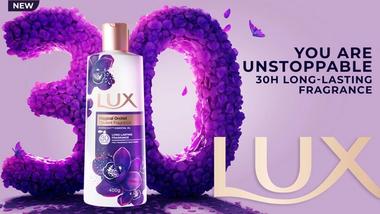
LUX provides a clear example of how this scientific thinking translates into formulation.
Inspired by consumer belief in the mood-enhancing power of fragrance, our teams worked with global perfumers to develop fragrance molecules that remain substantive on the skin for extended periods. In India, the LUX Magical Orchid Bodywash demonstrates this capability, designed with the right formulation and a fragrance that contains highly substantive large fragrance molecules, which help with its ultra long-lasting performance.
These ‘heavier’ components are designed to remain on the skin for longer than typical fragrance ingredients, and the art is in combining the right chassis with the perfect fragrance.
The product itself is only one example. The larger story is the capability behind it. As neuroscience informs our fragrance creation, formulation science, and emotional-benefit mapping, it strengthens our broader ambition: designing products that nurture confidence, assurance, and emotional resilience in everyday life.
The future of sensorial science at HUL
As research deepens, we are exploring how fragrance, texture, and cleansing interactions can influence emotional states such as calmness, confidence, or readiness for the day. Neuroscience, combined with data from our sensorial labs, is helping us build a multidimensional understanding of how our products nurture both the skin and the self.
By grounding sensorial benefits in neuroscience, we design products that not only perform on the surface but also contribute to how consumers can feel more assured and more themselves.