
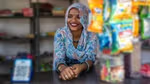
Across rural India, local markets are evolving. Rising aspirations, improved connectivity, and expanding access to branded goods are reshaping consumption patterns even in small villages. For many communities, access to everyday essentials and women-focused products still require traveling to nearby towns or larger market hubs.
Didi Ki Dukaan responds to this gap by bringing both entrepreneurship and access to such products at the village level. The initiative supports rural women in establishing hyperlocal retail shops that serve their communities while creating sustainable livelihoods for the entrepreneurs who run them.
Entrepreneurship rooted in the community
Didi Ki Dukaan operates within HUL’s broader Skills Academy for Advancement of Livelihoods (SAFAL) initiative implemented in partnership with YuWaah, UNICEF and the B-ABLE Foundation. Together, the programme is working to establish 1,000 women-led community retail stores across Jharkhand, Rajasthan, and Odisha.
Each store is operated by a local woman entrepreneur selected through community engagement processes. These entrepreneurs receive training in financial literacy, digital tools, and business management, equipping them with the capabilities required to run a small retail enterprise independently.
The model is designed to be fully hyperlocal, with stores set up within the villages they serve. This enables women to earn a livelihood without challenges like long travel or rigid work hours. By placing economic opportunity inside the community, the initiative removes key barriers that often limit rural women from pursuing income-generating work.
Kanika Pal, Sustainability Director, Hindustan Unilever Limited
Strengthening access to everyday essentials
Village-level retail enterprises play a critical role in expanding access to essential products. As rural consumption grows, demand for quality daily-use goods, packaged foods, and personal care products is increasing. However, the distance to formal retail outlets can still make these products difficult to access consistently.
Women-led community stores help bridge this gap. By bringing a curated selection of essential and women-centric products closer to home, they reduce dependency on distant markets and create a reliable point of purchase within the village ecosystem.
At the same time, these stores contribute to stronger local market networks. In several cases, they also provide a platform for promoting locally produced goods enabling regional producers and small-scale suppliers to reach nearby consumers more effectively.
Building capability for long-term enterprise
The ambition behind Didi Ki Dukaan extends beyond opening retail outlets. The initiative focuses equally on strengthening the entrepreneurial capabilities of the women who lead them, while empowering them in the long run.
Participants receive structured training in financial management, bookkeeping, digital literacy, customer engagement and structured mentorship. Access to supply chain networks helps ensure reliable inventory, while linkages to financing options support business continuity and expansion where required.
Implementation on the ground is led by the B-ABLE Foundation, which works closely with communities to identify potential entrepreneurs and support them through the early stages of enterprise development. YuWaah, UNICEF supports advocacy, co-funding opportunities, and government linkages that help align the programme with broader youth and livelihood initiatives.
This collaborative approach ensures that Didi Ki Dukaan functions not simply as a retail entrepreneurship intervention, but as a platform for long-term economic participation of women contributing to sustainable rural growth.
Visibility, aspiration, and social change
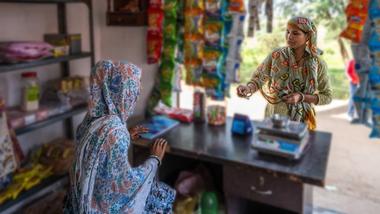
The impact of women-led enterprises often extends beyond the immediate business itself. A local shop run by a woman entrepreneur can become a visible symbol of economic agency within the community.
For many rural women and girls, the presence of such role models helps reshape perceptions around work, entrepreneurship, and financial independence. Over time, this visibility encourages broader participation and strengthens the social acceptance of women-led enterprises.
As these stores become embedded in village economies, they also contribute to strengthening local supply chains and improving last-mile access to products that support everyday well-being. The additional income earned by these women strengthens their influence within the household, often translating into better choices around children’s education, nutrition, and healthcare. As accessibility and earnings rise, the overall community benefits through better wellbeing, greater participation, and more inclusive local growth.
Linking livelihoods with rural market growth
Didi Ki Dukaan reflects a broader understanding of how rural markets evolve. Economic participation and consumption often grow together. When women gain access to entrepreneurship and income opportunities, household purchasing power increases and local markets become more vibrant.
Through SAFAL and related initiatives, we continue to explore livelihood models that combine enterprise development with improved market access and women empowerment. Didi Ki Dukaan represents one such model, rooted in local realities and designed to scale through partnerships.
By enabling rural women to build businesses within their own communities, the initiative contributes to a future in which economic participation, market development, and social progress reinforce one another.
To know more about Livelihood initiatives at Hindustan Unilever Limited, click here.