

Sustainability at HUL has been shaped by a simple conviction that has guided the business for decades. What is good for India is good for HUL. That belief has gradually evolved into a system of decisions, priorities, and investments that now sit at the centre of how the organisation operates.
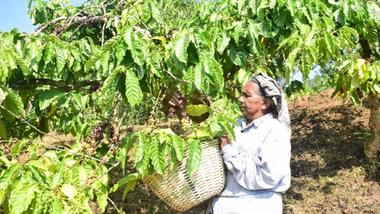
Hindustan Unilever Limited’s ranking as No. 1 in Businessworld’s India’s Most Sustainable Companies (IMSC) 2024–25 reflects this long arc of integration. Positioned at the top across sectors as well as within FMCG, the recognition follows a more rigorous evaluation framework that examines governance, execution, and measurable impact alongside disclosures.
Over time, sustainability at HUL has moved from a set of initiatives to a clearly defined strategic lens. Focus has sharpened around four priority areas where the business can drive meaningful impact at scale: climate, nature, plastics, and livelihoods. These pillars provide a common direction across functions, aligning operational choices, supply chain design, and long-term growth with broader environmental and social priorities.
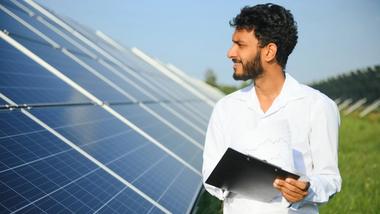
This direction is reinforced by measurable progress across core operations and by an expanding scope that includes value chains and partnerships. Ambitions such as net zero emissions across Scope I, II, and III, and efforts to advance circularity and resource efficiency, reflect a willingness to engage with complexity rather than avoid it. The same applies to livelihoods and water stewardship, where the emphasis remains on building systems that endure and scale.
What emerges is an approach defined by consistency and coherence. Sustainability is embedded into governance, shaped through collaboration, and pursued with a level of transparency that reflects both confidence and accountability.
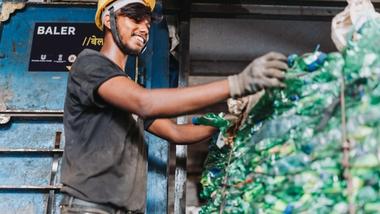
As expectations continue to evolve, sustainability increasingly defines how businesses are assessed and trusted. Recognition of this nature reflects a model that has been built with intent, expanded with discipline, and sustained through long-term commitment.
To learn more about HUL’s sustainability approach and ongoing initiatives, visit our Sustainability page.