

Healthy soil is essential for growing healthy tea. It helps plants access nutrients, retain water and withstand environmental stresses. However, years of intensive farming and changing climate conditions can gradually reduce soil quality, making tea cultivation more challenging.
Today, tea-growing regions across India are experiencing rising temperatures, erratic rainfall and increased pest pressure. These challenges can affect tea yields and threaten the long-term sustainability of the crop.
A different approach to growing tea
This is where regenerative agriculture comes in.
Regenerative agriculture focuses on restoring soil health, improving biodiversity and making farms more resilient to climate change. It aims to work with nature while maintaining productive and profitable farming systems.
Since 2024, Hindustan Unilever Limited (HUL), together with the trustea Sustainable Tea Foundation, has been implementing a large-scale regenerative agriculture programme across India's tea supply chain.
Today, the programme covers around 43,000 hectares. The goal is simple: build healthier soils, more resilient farms and a stronger tea supply chain for the future.
Bringing small tea growers into the journey
In 2025, the programme expanded to include small tea growers through TeaNext, a HUL-supported initiative launched in Assam.
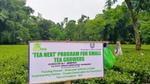
This is an important step because small tea growers contribute more than half of India's tea production. Through demonstration hubs and practical training, farmers are gaining first-hand experience of regenerative agriculture practices and learning how these can support both productivity and sustainability.
Starting with science
The first step in regeneration is understanding the current state of the land.
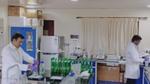
More than 3,500 soil samples have been analysed across tea-growing regions to assess soil health. At the same time, trustea's Emission Calculator (TEC) is helping map the carbon footprint of tea production.
Together, these tools help identify opportunities to improve soil health, optimise inputs and reduce greenhouse-gas emissions.
Practical changes on the ground
The programme focuses on farming practices that can be adopted at scale, including:
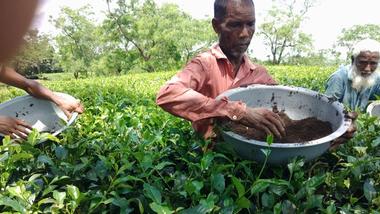
- Composting to improve soil health and add organic matter
- Mulching to conserve moisture and protect the soil
- Green manuring to naturally return nutrients to the land
- Shade-tree management to support tea growth and biodiversity
- Better nutrient management to reduce dependence on chemical fertilisers
These interventions are designed to improve soil health while helping farms remain productive and economically viable.
Early results are encouraging
The programme is targeting:
Up to 25% reduction in nitrogen fertiliser use
10-15% improvement in yields
25% increase in soil carbon
To date, more than 3,00,000 shade trees have been planted across participating tea-growing areas. These trees help improve biodiversity, create favourable growing conditions for tea and capture carbon from the atmosphere.
Over 65,000 tonnes of compost have been produced on-farm, returning valuable organic matter to the soil. Apart from vermicomposting, the program has adopted Novcom technology to enable faster, cost-effective production at scale; producing compost in three weeks versus three months for vermicompost or heap composting. Novcom technology does not require dedicated infrastructure, uses one-third of the manpower and cost as compared to vermicomposting, and enables compost production close to the point of application.
By the end of 2026, compost production is expected to reach 1,20,000 tonnes.
Looking ahead
The ambition is to expand the programme from 43,000 hectares in 2026 to 1,00,000 hectares by 2030.
At that scale, regenerative agriculture has the potential to significantly reduce greenhouse-gas emissions while strengthening the resilience of India's tea sector.
More importantly, it demonstrates how science, technology and sustainable farming practices can come together to help create a more climate-resilient agricultural supply chain.
For HUL and trustea, regenerative agriculture is not just about farming differently. It is about helping secure the future of tea while creating lasting benefits for farmers, communities and the environment.
Frequently Asked Questions (FAQs)
What is the difference between regenerative and organic agriculture?
Organic farming focuses on avoiding synthetic inputs such as pesticides and fertilisers. Regenerative agriculture is broader: it focuses on outcomes — restoring soil health, building biodiversity, and improving climate resilience — and may allow limited, responsible use of inputs where necessary. A farm can be regenerative without being certified organic, and vice versa.
Does regenerative agriculture affect the quality or taste of tea?
Healthier soil improves the availability of nutrients to tea plants, which can positively influence flavour compounds and overall leaf quality. Practices like composting and reduced synthetic fertiliser use tend to produce a more complex nutrient profile in the soil, which many producers associate with better-quality tea.
Does switching to regenerative farming reduce tea yields?
Early results from the programme suggest the opposite: yields have improved by 10–15% in participating farms. By restoring soil structure and reducing dependence on chemical inputs, regenerative practices can maintain or increase productivity — particularly under stress conditions such as drought or erratic rainfall.
What is trustea, and what role does it play in this programme?
trustea (the Trustea Sustainable Tea Foundation) is an industry-wide sustainability platform for India's tea sector. In this programme, trustea acts as the implementing partner alongside HUL, providing the Emission Calculator (TEC) to track the carbon footprint of tea production and supporting the rollout of regenerative practices across participating estates and small growers.
How does regenerative agriculture help reduce greenhouse-gas emissions from tea farming?
It works through several mechanisms: increasing soil carbon storage (by up to 25% in participating farms), reducing nitrogen fertiliser use — which produces nitrous oxide, a potent greenhouse gas — and planting shade trees that actively sequester carbon. The programme uses trustea's Emission Calculator to measure and track these reductions at farm level.