

India's retail landscape is evolving rapidly. Channels are becoming more diverse, customer expectations are rising and operational complexity continues to increase. Distribution Centres today must manage thousands of product combinations, multiple servicing models and increasingly dynamic demand patterns, all while maintaining high levels of efficiency and accuracy.
To stay ahead of these shifts, we are reimagining our warehouses into Future-Fit Distribution Centres (DCs) powered by digital technologies, enabled by automation and supported by the right infrastructure to deliver faster, smarter and more connected operations.
This transformation is a key part of HUL's broader ambition to build a supply chain that is agile, efficient for growth and increasingly intelligent. Across our network, we are leveraging digital capabilities, advanced analytics, AI and automation to move from reactive operations to predictive, connected and system-led decision-making.
Moving from manual operations to intelligent fulfilment
Our Future-Fit Distribution Centres represent a significant shift in how warehouses operate.
Traditionally, warehouse operations relied heavily on manual coordination, paper-based processes, static and sequential workflows and supervisor-led decision-making. Critical information was often available only after events had occurred, making it difficult to identify bottlenecks early, respond to disruptions quickly or optimise resources dynamically.
The Digital DC model changes this paradigm. Today, we are transforming these warehouses into intelligent fulfilment hubs where information flows seamlessly in real time from warehouse execution to network-level decision making.
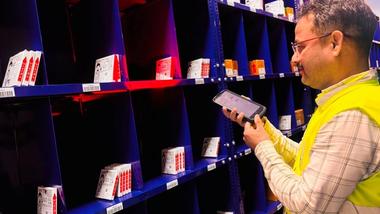
Powered by an advanced Warehouse Management Systems (WMS), IoT (Internet of Things) devices , handheld execution terminals, AI/ML algorithms, Image Processing , Digital workflows and Real-time operational visibility, every movement across the warehouse becomes electronically tracked and connected.
From inbound receipt and put-away to replenishment, picking, loading and dispatch, transactions are captured digitally, creating a single source of operational truth.
This enables a significant shift from people-dependent execution to system-guided execution. Tasks are prioritised intelligently, execution happens parallelly, exceptions become visible in real time and operational decisions are supported by data rather than intuition alone.
Automation & Image Processing is helping improve efficiency and accuracy while reducing dependency on manual interventions. AI/ML algorithms are helping to make dynamic & smart decisions on the go. An AI enabled Control Tower generates advanced analytics which provide actionable insights/alerts and loss trees which is enabling teams to identify opportunities and respond faster to operational challenges. AI-powered tools support smarter execution while keeping people at the centre of decisions.
In essence, Digital DC is transforming warehouses from transaction-processing facilities into intelligent fulfilment engines with human in loop.
Enabling growth through strategic transformation
Our Future-Fit DC programme is built on a simple belief: the supply chain must not only support growth, but it must also actively enable it.
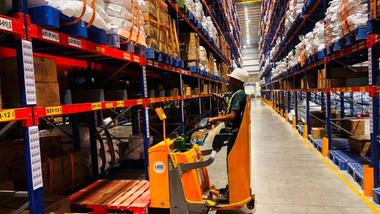
The transformation is anchored on four strategic pillars: future-fit infrastructure, fit-for-purpose logistics partnerships, robotics and automation, and digital distribution centres.
Future-fit infrastructure
Modern infrastructure creates the physical foundation required to support growth, improve safety, enhance throughput and accommodate evolving customer requirements.
Fit-for-purpose logistics partnerships
Strong collaboration with Logistics Service Providers enables scalable operations by combining HUL's process excellence and technology enablement with partner execution capabilities.
Robotics and automation
Automation helps reduce manual dependency, improve consistency and increase operational efficiency while enabling teams to focus on higher-value activities.
Digital Distribution Centres
Digital DC serves as the intelligence layer that connects people, processes, infrastructure and automation into one integrated operational ecosystem.
Together, these pillars create a more scalable, resilient and responsive network capable of serving evolving customer and channel needs.
Digitisation sits at the heart of this journey. Advanced warehouse management system, IoT-enabled execution, AI-powered insights and real-time orchestration are helping us make faster, smarter, dynamic and more informed decisions while improving service levels and operational performance. The result is a shift from reactive management to predictive and system-led operations where decisions are faster, more informed and increasingly data driven.
These investments also support HUL's strategic priorities of building resilience in the face of volatility, enabling faster and more flexible growth, improving productivity and strengthening differentiated service models across channels.
Empowering people and strengthening partnerships
While technology is a powerful enabler, the true impact of this transformation lies in the people who bring it to life every day.
Future-Fit DCs empower frontline teams with greater visibility, clearer processes and smarter tools that simplify execution. At the same time, leaders benefit from richer insights, enabling faster interventions and more informed decision-making.
The transformation is also driven by deep collaboration with our Logistics Service Provider (LSP) and transport partners. By combining HUL's process expertise, capability building and technology enablement with our partners' operational excellence, we are building a stronger and more transparent logistics ecosystem.
This spirit of partnership is helping create greater trust, transparency and shared value across the entire supply chain.
Delivering better outcomes for customers
Ultimately, every supply chain transformation must create value for the customer.
A more connected, transparent and responsive network translates into higher reliability, improved service levels and greater consistency. It allows us to respond faster to changing demand, improve availability across channels and ensure our products reach consumers efficiently.
By simplifying complexity, improving visibility and enabling faster decisions, Future-Fit DCs allow HUL to respond more effectively to changing customer needs and market dynamics.
As we continue to scale Future-Fit Distribution Centres across the country, we are building more than modern warehouses. We are creating a supply chain that is digital, automated, resilient and future-ready; one that combines technology, partnerships and human ingenuity to support HUL's next phase of growth while delivering superior service for customers across India.
Frequently asked questions
Why is HUL investing in Digital Distribution Centres?
As consumer demand evolves and channels become more diverse, HUL is investing in Digital Distribution Centres to build a faster, more agile and future-ready supply chain that can serve customers with greater speed, reliability and efficiency.
How do Digital DCs support HUL's growth ambitions?
Digital DCs help strengthen HUL's distribution network through real-time visibility, data-driven decision-making and improved operational efficiency, enabling the business to respond more quickly to changing market needs and support future growth.
What technologies power HUL's Digital Distribution Centres?
HUL's Digital DCs are powered by advanced Warehouse Management Systems (WMS), IoT-enabled execution, real-time process orchestration and analytics-driven insights that help create a more connected and intelligent supply chain.
How will customers benefit from HUL's Future-fit Distribution Centres?
By improving transparency, responsiveness and operational reliability, Future-fit Distribution Centres help HUL deliver better service levels, enhance product availability and create a more seamless experience for customers across channels.