

As climate pressures intensify—with rising heat, water stress, and extreme weather—access to reliable, safe sanitation becomes even more critical. For vulnerable urban communities, this is not just about convenience, but resilience and health security.
Breaking this cycle requires more than infrastructure. It calls for social innovation—reimagining sanitation as a service that is inclusive, sustainable, and community-led.
From infrastructure to integrated urban innovation
Suvidha began as a pilot in Mumbai in 2016 with a belief that everyone deserves access to clean, safe, and dignified spaces. A decade on, it has evolved into a scalable model with 25 centres, serving over 600,000 people annually and saving 300 million litres of water cumulatively to date across centres.
This growth has been enabled through strong partnerships with BMC, HSBC India and JSW Foundation, alongside implementation and governance partners including Pratha Samajik Sanstha, United Way Mumbai and EY.
Breaking the sanitation paradox
Suvidha redesigns sanitation as a self-sustaining service model—combining affordable access with services like laundromats and showers to ensure consistent quality and viability.
Multiple services under one roof
Globally, public sanitation systems often struggle with low usage and poor maintenance. Suvidha breaks this cycle by treating sanitation as a self-sustaining service model. Low-cost subscriptions and pay-per-use models are combined with value-added services such as laundromats and showers, creating multiple revenue streams.
Designed for safety of all
Every Suvidha centre is designed around lived realities. Instead of asking communities to adapt to infrastructure, Suvidha adapts to communities. Facilities are safe, accessible, and inclusive—with separate spaces for men, women, and children, 24/7 accessibility, and features that prioritise dignity.
This human-centred design is complemented by behaviour change programmes, ensuring high adoption and sustained usage. The result is not just access, but habit formation—a critical shift in public health outcomes.
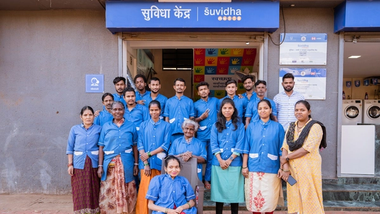
Self-sustaining operations, led by women
Centres are designed to remain financially viable while delivering consistent quality—making sanitation a sustained, scalable model. Women-led teams drive operations, supported by strong community ownership and behaviour change programmes that enable consistent usage and long-term adoption.
Built for climate resilience
Suvidha centres are built for climate resilience, each centre is powered by solar and incorporates water recycling systems. Since inception, Suvidha centres have cumulatively helped save over 300 million litres of water. These design features ensure reliable access to essential hygiene services, particularly during periods of extreme heat and water stress, while reducing community vulnerability to climate impacts.
Innovation powered by partnerships
Suvidha is built on strong public-private collaboration; from BMC to partners like HSBC India and JSW Foundation. The initiative is supported by on ground partners such as United Way Mumbai and Pratha Samajik Sanstha, with EY serving as a governance partner.
From Mumbai to a national blueprint
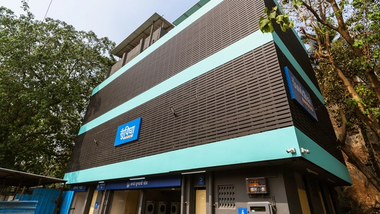
With 25 centres operational today and 6,00,000 people accessing services every year, Suvidha has evolved into a replicable model for urban sanitation. Its impact has been recognised globally and is now being used to inform national sanitation frameworks.
A decade of innovation. A platform for the future.
Ten years on, Suvidha stands as a powerful example of purposeful innovation. It shows that solving large challenges requires designing with people, integrating services, building sustainable models, and collaborating deeply.
As Suvidha scales, its focus remains clear, unlocking health, dignity, and opportunity for millions more by continuing to reimagine urban infrastructure.