
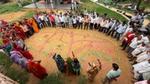
On a sunlit morning in rural Rajasthan, a village gathers in an open courtyard. Women, farmers, elders and young people sit together on the ground. Pots of bright colour are passed around. Slowly, a picture begins to take shape.
It is not a painting. It is a map of their village.
Fields. Wells. Homes. Grazing lands. Water bodies. Every landmark is drawn from memory, each one carrying a story of how the village lives with water.
At first glance, the exercise looks simple. But once the map is complete, the real conversation begins. How much water does the village have? How much will it need this year? Will the rainfall be enough? What crops can be sustained? Where are the gaps?
The answers form the village’s water budget.
For the community, this is more than a planning document. It is a way of looking at water differently. Not as an individual resource, but as something shared, something that must be understood, protected and governed together.
This idea sits at the heart of the Hindustan Unilever Foundation’s approach to water stewardship. By encouraging communities to understand their water resources, conserve them and use them more efficiently, the Foundation helps strengthen community-led water governance and build long-term water security.
The water budget becomes an action plan, shaped by the people who know the village best.
From a map to an action plan
In the village, the water budget soon becomes a starting point for action. When gaps are identified, the community comes together to find solutions. Some are supported through government schemes such as government convergence for water recharge structures and micro-irrigation. Some are enabled through Hindustan Unilever Foundation and its partnerships with local institutions and development organisations, like the implementation partner in Jaipur, Access Development Services (ADS). Many are driven by the villagers themselves, through their labour, resources, community contributions, and leadership, supported locally by trained Jal Mitras and Jal Sakhis (Community Resource Persons).
The interventions are practical and rooted in everyday needs: deepening wells, creating and restoring water-harvesting structures, improving groundwater recharge, and strengthening local water infrastructure and its governance.
Over time, these efforts begin to change more than water availability. They reduce uncertainty for farming households. With greater confidence in water availability, farmers are able to make better cropping decisions, improve productivity and plan for the long term. Better yields can mean more stable incomes and stronger livelihoods.
Women at the centre of change
One of the most meaningful shifts has been the role of women. They are no longer just participants in the conversation. They are helping lead it.
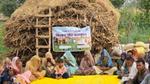
Women take part in mapping exercises, planning discussions and community decision-making, emerging as important champions of behaviour change and resource stewardship, often stepping into leadership roles as Jal Sakhis.
Resilience in the soil
The journey towards resilience is also visible in the farms. Many farmers have adopted vermicomposting and scientific soil health management techniques to increase soil organic carbon, improving soil health and reducing dependence on chemical fertilisers.
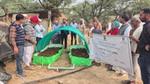
During periods when access to urea became difficult and expensive, farmers who had invested in organic alternatives were better placed to continue cultivation. What began as a sustainability practice became a resilience strategy. By improving soil moisture retention, farmers are able to conserve water during the Rabi season.
The larger lesson
There is a quiet lesson in this village’s story. Infrastructure matters. A well can be built. A pond can be restored. A watershed can be rejuvenated. But lasting change begins when people take ownership.
When an entire community understands its water resources, plans collectively and takes responsibility for its future, water security becomes far more sustainable.
At Hindustan Unilever, we are glad to be a small part of this water transformation journey across 600 villages and 10 Blocks in Jaipur through the work of the Hindustan Unilever Foundation. Over the project period (July 2024 to March 2028), this initiative aims to reach 100,000 farmer households and directly benefit 70,000 small and marginal farmers across 52,500 hectares.
So far, HUF-supported programmes, in collaboration with partners, have delivered a cumulative and collective water potential of over 4.5 trillion litres since inception, till March 2025, through improved water management on both the supply and demand sides. This has been independently assured up to 2024-25. Specifically, this programme in Jaipur targets creating a cumulative water potential/savings of 176.39 billion litres and generating 5.82 lakh person-days of employment.

Frequently Asked Questions
What is a village water budget?
A village water budget is a community-led planning process that compares available water resources with expected demand for households, farming and livestock. It helps villages identify potential water deficits or surpluses and make informed decisions before the crop season begins.
How does Hindustan Unilever Foundation support water stewardship in rural India?
Through programmes such as Jaldhara, the Hindustan Unilever Foundation works with communities and partners to strengthen water security by promoting participatory planning, water conservation, efficient irrigation practices and sustainable farming solutions.
Why is community participation important for water security?
Lasting water security depends on communities understanding their water resources, planning collectively and taking ownership of local solutions. Community-led approaches help ensure that water management decisions are practical, inclusive and sustainable over the long term.
How does water budgeting help farmers build resilience?
Water budgeting helps farmers understand how much water is available, plan crops more effectively and adopt practices that improve water-use efficiency. This can support more resilient farming systems, better soil health and stronger livelihoods over time.