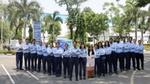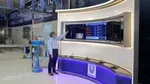
Haridwar’s recognition in the Supply Chain Resilience category follows the site’s comprehensive digital transformation to serve emerging channels while strengthening supply chain agility. By implementing the Advanced Fourth Industrial Revolution (4IR), Haridwar factory successfully transitioned from large-scale manufacturing to niche, premium, small-batch production.
The factory deployed an Agentic AI-powered Supply Chain Nerve Centre that closely tracks market demand and automatically adjusts production. It also anticipates and manages material risks in advance, reducing disruptions. Additionally, an industry first, ‘Nano 3.0’-enabled technology, allows simultaneous product runs, thereby improving run flexibility. As a result, the site reduced response times by 72%, lowered inventory days on hand by 24%, and sustained an on-time-in-full (OTIF) delivery rate of 99%, while continuing to support business growth.
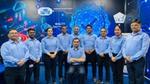
Sonepat’s recognition in the Sustainability category follows a sustained transformation to reduce its environmental footprint across energy, water and waste. The unit leveraged AI-led energy management, IoT-enabled cleaning systems and a transition to renewable energy across its operations. This enabled the site to improve energy efficiency by 29%, achieve 100 times groundwater recharge, lower Scope 1 and 2 emissions by 99%, and reduce raw material waste by 58%. This marks the second recognition for the Sonepat factory, which previously earned the End-to-End Value Chain Lighthouse designation in 2024.
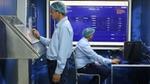
HUL’s journey on the WEF Global Lighthouse Network began in 2021, when its Dapada factory was recognised as an End-to-End Value Chain lighthouse, followed by a second distinction for Sustainability in 2023. Sonepat earned its first Lighthouse recognition for End-to-End Value Chain in 2024, while the Doom Dooma unit at Tinsukia was recognised in the same category in 2025. Most recently, in January 2026, HUL’s Gandhidham and Pondicherry sites were recognised for Sustainability and Productivity, respectively. With Haridwar’s debut and Sonepat’s second distinction, HUL becomes one of the few companies globally with multiple sites holding more than one Lighthouse distinction.
Priya Nair, CEO and MD, Hindustan Unilever Limited, said, “The recognition of Haridwar and Sonepat marks a landmark year for HUL, with four recognitions in a single year[a]. At HUL, we believe growth and sustainability must progress together. This is a testament to the passion and innovation of our teams and reinforces our ambition to build an AI-powered organisation that delivers superior value for consumers while contributing positively to society and the planet.”
Yogesh Mishra, Executive Director, Supply Chain, Hindustan Unilever Limited, said, “Haridwar and Sonepat reflect how we are reimagining our Supply Chain to be more agile, resilient and sustainable. By leveraging AI, advanced analytics and digital technologies, we are building end-to-end capabilities that can respond dynamically to changing demand while reducing our environmental footprint. These recognitions reinforce the impact of our teams’ commitment to driving innovation at scale and setting new benchmarks for the industry.”
Kiva Allgood, Managing Director, World Economic Forum said, "The world's leading manufacturers are no longer optimising individual processes; they are reimagining entire operating systems. The newest Lighthouse sites show how intelligence is becoming embedded into the fabric of operations, enabling organisations to respond faster, learn continuously and unlock new levels of performance across their value chains.”