
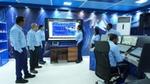
The World Economic Forum (WEF) has designated Hindustan Unilever Limited’s (HUL) factories in Gandhidham, Gujarat and Pondicherry, as Advanced Fourth Industrial Revolution (4IR) Lighthouse sites.
Previously, the HUL’s Dapada site received this recognition in 2022, followed by the Sonepat site in 2023, and the Doom Dooma unit in 2025. With this, the total count of HUL factories, earning the Advanced 4IR Lighthouse recognition, stands at five.
The World Economic Forum’s Global Lighthouse Network honours the most digitally advanced factories that transform operations, enhance efficiency, drive sustainable growth, and upskill their workforce.
The two sites run the 4IR technology in almost every process, with more than 50 initiatives currently in place across the end-to-end supply chain.
Operating in the water-scarce region of Kutch in India, LLPL Gandhidham’s recognition as a Sustainability Lighthouse site came after it undertook a transformation across the two critical sustainability areas of nature and climate. The unit leveraged AI, digital twins and Industrial Internet of Things (IIoT) across its end-to-end supply chain to improve water stewardship, enable traceable palm oil sourcing, support sustainable formulations and refrigerants, and implement a digitally enabled aquifer recharge.
As a result, the site reduced water use by 17%, saved 6.12 billion litres of community water, reduced waste by 48%, lowered Scope 1 and 2 emissions by 90% through a transition to renewable energy, and contributed to a 12% reduction in Scope 3 emissions, while supporting double-digit growth for the site over three years.
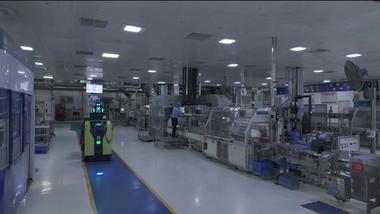
The second site – Unilever Pondicherry, was awarded the WEF distinction in Productivity, after it overcame multiple challenges such as product complexity driven by accelerating innovation cycles, operational challenges in throughput, quality and flexibility. The unit managed to achieve this by adopting Machine Learning-driven process control and changeover optimisation as well as AI-powered autonomous troubleshooting and manpower forecasting. Its digital transformation enabled 25% volume growth, 23% defect reduction and a threefold increase in product variants within existing production capacity.
Priya Nair, CEO and MD, Hindustan Unilever Limited, said, “We are delighted to begin the new year with a double honour from the World Economic Forum. This achievement reflects our strategic focus on leveraging advanced technologies to optimise operations, deliver superior product quality and set new benchmarks for innovation. These initiatives strengthen our competitive edge and create long-term value for our stakeholders, while contributing to a more sustainable future.”
Yogesh Mishra, Executive Director, Supply Chain, HUL, said,“This recognition reinforces our commitment to building a sustainable future, powered by the transformative potential of AI and digitisation. By harnessing AI and advanced technologies, we are reducing environmental impact, optimising resource use, and driving circular practices across our operations. The WEF Lighthouse honour for our sites demonstrates that sustainability, innovation, and workforce development can go hand-in-hand, creating long-term value for both business and society.”
“Competitiveness today is no longer defined by efficiency alone, but by the ability to sense, adapt and respond at speed,” said Kiva Allgood, Managing Director, World Economic Forum. “This year’s industrial transformation sites show how intelligence-led operations are being scaled to place resilience and sustainability at the core of how industry operates.”