Economic Resilience (Opens in new modal)
Banwari Lal Gurjar’s FPO-led path to water security
Hindustan Unilever Limited Change location

India is on the brink of an urgent water crisis, with predictions of severe water stress by 2030 and a staggering 50% water shortfall. This is a critical situation for a country with 18% of the world’s population but only 4% of its water resources. India’s farming sector alone consumes over 80% of India's freshwater resources. The diverse water challenges we face demand immediate and varied solutions.
As a responsible corporate entity committed to addressing development challenges, Hindustan Unilever Limited established the Hindustan Unilever Foundation (HUF) in 2010. At Hindustan Unilever Foundation (HUF), we recognise the urgent need to address this issue on a war footing to usher in a prosperous shared future. The foundation's mission is to strengthen and amplify scalable solutions that can effectively tackle India’s water challenges in rural areas that are intertwined with agriculture. HUF's ‘Water for Public Good’ initiative is rooted in the belief that water is a shared resource and should be managed by citizen communities. The goal is to catalyse effective solutions by engaging with government bodies, communities, experts, and mission-based organisations collaboratively.
HUF partners with on-ground civil society organisations (CSOs) with deep domain expertise in water ecosystems to design and execute context-appropriate solutions. HUF’s water conservation initiative partners with 13 CSOs and multiple co-financiers (including government bodies). The programmes span 19,000 villages in 14 States and 2 Union Territories across India.
In our search for programmatic solutions, we seek to integrate traditional wisdom with cutting-edge modern practices, including the best digital tools like Internet of Things (IoT) and Geographic Information System (GIS). We realise that raising the spectre of despair will not serve any purpose, but optimism for a secured water future will.
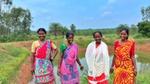
Awakening this consciousness is vital, and active community engagement is instrumental in our efforts to drive behaviour change. For instance, a concept like making a water budget for the village carries a power of conviction far beyond what one imagines. In many of our programmes, the torchbearers of behaviour change are women.
At the core of HUF's initiatives are the communities and farmers. The aim is to provide them with enduring solutions that empower them to 'Know More' about their vital water resources, 'Save More', through the use of scientific conservation methods, and 'Use Less' water in their agricultural practices, instilling a sense of hope and optimism for a sustainable future.
Water is a resource that we all share as humanity, and the onus of securing it rests on every one of us. With this intent, HUF partners with mission-driven organisations on improving water security by:
By collaborating with diverse stakeholders, HUF endeavours to enhance water security and bolster resilience on a broader scale. HUF’s programmes deliver improved water infrastructure, promote efficient and improved crop management practices, foster climate adaptiveness, and strengthen community engagement initiatives. Through these concerted efforts, HUF seeks to make substantial strides in improving water security and resilience.
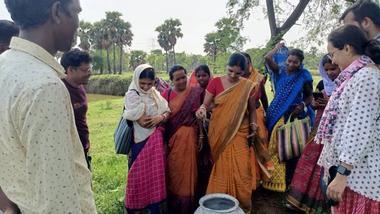
These enablers have helped HUF pivot its water security solutions and scale.
Adoption of progressive agriculture practices: We consistently encourage sustainable practices through on-farm demos. The outcomes underline sustainable agriculture as a potent alternative to the country’s monocropping, as it promotes water-efficient practices. One-acre farming is one such example that encourages farmers to embrace water-efficient crops and techniques on one-acre plots.
Convergence with flagship government programmes: We believe leveraging existing government programmes effectively unleashes large resources to mitigate water vulnerability. Strategic state selection is vital to realising this outcome. Programmes such as Mahatma Gandhi National Rural Employment Guarantee Scheme (MGNREGS) and National Rural Livelihood Mission (NRLM) are among the pillars of our many interventions.
Local cadres of paraprofessionals: Local communities know their problems best and have access to traditional knowledge and practices. HUF develops local teams of water and agriculture paraprofessionals as a critical component of its sustainable village development programme. Thus, we effectively enlist knowledge within communities while offering new employment opportunities to address rural unemployment. This has successfully bridged the knowledge gap and awarded the community's youth meaningful employment, ensuring the next generation of learned farmers.
Innovative technology-enabled tools: In today’s tech-led world, sustainable water crisis management has become sophisticated. We use innovative technology-enabled tools, e.g. GIS-based watershed mapping, IoT-based soil moisture sensors to estimate water need and simulation-based water games to help create water numeracy and better water management at scale.
Supporting women in pivotal roles: Due to the ‘feminisation’ of agriculture, as highlighted in the Economic Survey of 2017-18, women are key to any sustainable development programme in rural India. HUF promotes local women in critical roles like paraprofessionals, lead farmers, and local governance representatives. The focus on women cadres has paid rich dividends, boosting outcomes in water conservation and equitable water use.

The Key Performance Indicators (KPIs) for HUF are independently assessed and assured.
In collaboration with our partners, we have collectively and cumulatively (2024-25) delivered the following:

Through our programmes and partnerships, HUF has successfully raised the profile of solutions to India’s water challenges. Based on insights from our past programmes, we aim to focus on the following key pivotal spaces over the next 3-5 years.
Collaboration to ensure water security is a clear and urgent need that HUF is committed to fulfilling. Our experience shows that collaborations do not happen automatically. They need to be conceived, designed, and nurtured. The art and science of collaborations need to be mainstreamed within programme teams, with funders taking the lead in guiding their programmes towards a larger common purpose.
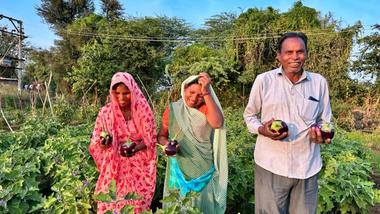
Banwari Lal Gurjar’s FPO-led path to water security
(1 of 3)
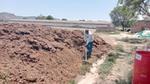
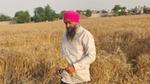
In Bhamod village of Rajhastan, India 54-year-old Banwari Lal Gurjar faced increasing challenges in sustaining his livelihood. Years of chemical-intensive farming had degraded soil health, rising input costs strained farm economics and chronic water scarcity limited productivity. Like many smallholders, he worked in isolation with limited market access, low awareness of FPOs and minimal participation in local water management decisions.
Banwari Lal’s journey changed after he joined the HUF supported programme and became an active member of the local Water User Group (WUG) and the Banganga FPO. Through regular participation in WUG meetings, he evolved from a passive beneficiary to a co-owner of local water solutions. Participation in water assessment and budgeting helped him better understand water availability and plan irrigation more efficiently.
With technical support, he adopted organic and low-cost soil health solutions such as Jeevamrit, Neemastra, waste decomposer and hydrogel, reducing dependence on chemical inputs. He also shifted from flood irrigation to a mini-sprinkler system and adopted moisture-conservation practices, significantly improving water-use efficiency. The Banganga FPO further supported this transition by providing access to quality inputs at lower costs and enabling transparent market linkages, making sustainable farming more economically viable.
The results highlight the impact of community-owned solutions. Banwari Lal significantly reduced water use, with wheat irrigation declining from 2.6 million litres to 1.9 million litres per season and barley irrigation reducing from 2.1 million litres to 1.7 million litres. Despite lower water consumption, productivity improved substantially, with wheat yields increasing from 20 quintals to 32 quintals, alongside higher returns from barley and mustard cultivation.
Through collective marketing via the Banganga FPO, he earned an additional ₹300 per quintal on wheat and mustard. Over two years, he sold 270 quintals of wheat and 50 quintals of mustard through the FPO, doubling his annual income from ₹40,000 to ₹80,000. At the institutional level, the FPO reported a 9% increase in procurement, reflecting stronger collective enterprise.
Banwari Lal Gurjar’s journey reflects a shift from individual struggle to collective strength. Reduced costs, improved incomes and better market access have strengthened his financial stability and enabled long-term planning. Through FPO-led agri-entrepreneurship and strong community institutions, water stewardship has translated into more resilient livelihoods, demonstrating how empowered communities can secure their own future
From guesswork to guided farming decisions
(2 of 3)
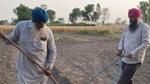
Dilbaag Singh, a farmer from a village in Punjab, India cultivates 4.05 hectares of land. Like many farmers in the region, he traditionally relied on experience and peer advice for crop management decisions, often resulting in precautionary interventions that increased costs without consistent results. His engagement with the Digital Farmer Network (DFN) marked a turning point in how he accesses knowledge, assesses risks and manages farm inputs.
Dilbaag’s journey with DFN began through its integrated notification system, which alerted him to upcoming online training sessions. By participating in these expert-led sessions, he gained real-time insights into crop health, pest management and stage-specific interventions. Over time, he replaced intuition-based decisions with evidence-based practices, improving both confidence and farm outcomes.
The value of DFN became evident during a recent pest concern. Using DFN’s ‘Slaah Mashwara’ (Expert Consultation) feature, Dilbaag shared a photograph of his crop for expert diagnosis. The response was prompt and precise — no chemical intervention was required at that stage. By acting on this advice, he avoided unnecessary spraying, saving ₹2,471 per hectare. Across his 4.05-hectare farm, this resulted in savings of nearly ₹10,000 from a single informed decision.
Beyond the immediate financial gains, the experience marked a deeper behavioural shift. Dilbaag moved away from input-intensive, precautionary practices towards timely and need-based interventions. By relying on expert guidance instead of reactive spraying, he reduced costs, minimised chemical use and contributed to improved soil and ecosystem health.
About the land today, Dilbaag views DFN as an essential farming companion, enabling better planning, efficient use of water and inputs, and informed risk management. His journey demonstrates how accessible digital platforms can empower farmers to take ownership of their decisions, strengthening livelihoods and supporting more sustainable agricultural systems. This shift from guesswork to informed decision-making reflects the essence of ‘Empowered Communities, Secured Futures’, where empowered farmers build resilience for both present and future generations.
HUF’s support has played a catalytic role in building and scaling the Digital Farmer Network (DFN), helping connect farmers with timely, credible and accessible agricultural knowledge. Through ongoing consultation and co-design, it strengthened the platform's content and services, ensuring advisories are rooted in trusted scientific and institutional expertise.
When a quiet voice reclaimed a village’s Water
(3 of 3)
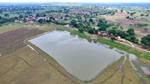
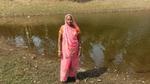
In 2024, during a Gram Swaraj Group meeting in Bijalpur village under Gram Panchayat Godawada Narang, discussions centred on rising water scarcity. Among those present was 46-year-old farmer Daya Bai, whose family of five depended on their rain-fed land with no assured irrigation, leading to seasonal migration and underutilised fields. A check dam built in 2013, once critical for irrigation, had become heavily silted and ineffective despite its potential to support multiple households.
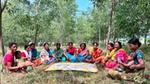
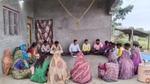
Within smallholder farmer meetings, this shared challenge evolved into collective reflection, leading women to ask: what if the check dam could be revived? This idea was translated into action. In the next Gram Swaraj meeting, the women collectively developed and submitted a formal proposal to deepen the structure through the Gram Panchayat at the Gram Sabha. What began as a discussion on water scarcity became a moment of leadership, with women stepping forward to reclaim a vital community asset.
The proposal was approved under the Mahatma Gandhi National Rural Employment Guarantee Scheme (MGNREGS), and work began soon after. Over nearly two months, around 70 families from nearby habitations found local employment, generating about 2,200 person-days of work.
At a time when migration would typically peak, this work provided a strong alternative livelihood option. The deepening of the check dam became a collective effort, with Daya Bai and other Saksham Samuh (Smallholder group) members closely involved in coordinating labour, arranging drinking water and supporting daily operations.
Community members also contributed through voluntary work, jointly cleaning and strengthening the structure. What was once a neglected asset was transformed into a symbol of shared ownership and collective action.
With the arrival of the monsoon, the impact became immediately visible. The check dam filled and, for the first time in years, retained water for an extended period, providing both irrigation and renewed confidence. That year, many families who would typically migrate stayed back to cultivate their land. During the Rabi season, 62 bighas of land connected to the check dam were brought under cultivation. Fourteen farmers representing 15 families, including Daya Bai, grew crops such as gram, wheat, maize, peas and lentils. Land that once depended solely on rainfall now had reliable water access, leading to higher production and improved household incomes.
The benefits extended beyond agriculture. Water retained in the check dam supported groundwater recharge, raising water levels in nearby wells, hand pumps and borewells. Irrigation became more efficient, and livestock had better access to water. Migration patterns also shifted significantly, with families that earlier migrated for six months now migrating for only about two months, allowing more time on their own land and with their families.
By strengthening women's collectives through capacity building, water literacy and governance training, HUF and VAAGDHARA have enabled women to take a leading role in community decision-making and water stewardship. Today, women are not only shaping local development priorities but also driving collective action to secure water resources and build long-term community resilience.
Have you got a few minutes to complete a survey? We would love to hear about your experience using Hindustan Unilever Limited.