
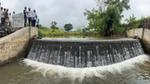
Despite receiving average rainfall, the village struggled with chronic water scarcity. Every summer, women walked long distances to fetch drinking water. Farmers watched their crops wither as groundwater levels dropped year after year. Wells ran dry faster, irrigation became unreliable, and families increasingly depended on migration for survival.
The irony was stark. Groundwater was Torankudi's primary source of water, yet no one truly knew how much was available, how quickly it was disappearing, or whether it could sustain the community's future.
Water was invisible. And so was the crisis unfolding beneath their feet.
A different kind of intervention
In 2023, the Sanjeevani Institute for Empowerment and Development (SIED), with support from Hindustan Unilever Foundation (HUF), began working with the community to address water security.
But instead of starting with infrastructure alone, the programme began with something more fundamental: awareness.
The initiative introduced a simple but powerful idea that would ultimately transform the village: people cannot manage what they cannot see.
Through a focus on water literacy, villagers began asking critical questions:
- How much groundwater do we actually have?
- How much water do we use every season?
- Are we extracting more than nature can replenish?
For the first time, water management became a collective village conversation.
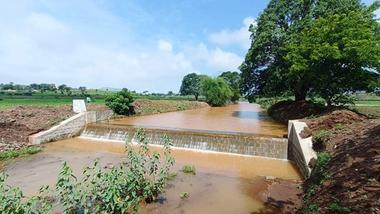
Making the invisible visible
At the heart of the programme was an innovative and participatory learning tool: the Water Budget Game.
What looked like a simple community activity soon became a turning point for Torankudi.
In the first round of the exercise, villagers made decisions individually. The result mirrored reality. Water reserves were quickly exhausted, some farmers used disproportionately more water, and others were left struggling.
In the second round, access to shared groundwater data changed everything.
Farmers collectively estimated water availability, discussed recharge potential, and planned crop choices based on actual resources. Groundwater was no longer an invisible asset. It became measurable, understandable, and something that belonged to everyone.
The exercise helped villagers realise that sustainable water use was not just an environmental issue. It was a shared responsibility and a pathway to greater prosperity.
Changing mindsets, transforming practices
The impact soon extended beyond the game.
Armed with knowledge and data, farmers began making more informed decisions about how water was used across the village.
Information about well levels and groundwater conditions was openly shared. Crop planning became linked to water availability rather than habit or tradition. Collective discussions replaced isolated decision-making.
The shift was reflected in farming practices as well.
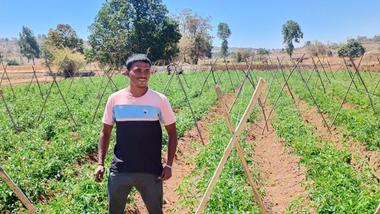
With support from the project, 44 farmers adopted drip irrigation systems to improve water efficiency. Seeing the benefits firsthand, another 40 farmers independently invested in the technology.
Crop choices evolved too. Farmers gradually moved from water-intensive and lengthy crop cycles to vegetables such as tomatoes, chillies, and brinjals, which required less irrigation while offering stronger and more reliable returns.
Water budgeting also enabled protective irrigation during critical periods, helping farmers sustain productivity even during water-stressed months.
The rise of a water-secure community
Perhaps the most remarkable transformation was not technological, but social.
Groundwater was no longer seen as the responsibility of individual borewell owners. It became a shared village resource.
Communities began monitoring wells together, discussing recharge patterns, preparing seasonal water budgets, and making collective decisions about resource use.
What emerged was a new culture of stewardship with transparency, cooperation, and long-term thinking.
A village transformed
Today, Torankudi's story is about much more than water conservation.
It is the story of a village that moved from uncertainty to planning, from individual action to collective responsibility, and from reacting to water shortages to actively managing its future.
By combining community participation, data-driven decision-making, and behaviour change, HUF's intervention helped transform groundwater from an invisible crisis into a visible opportunity.
And in doing so, it helped Torankudi build something even more valuable than water security: confidence in its ability to shape its own future.