1888
Sunlight arrives in India
Hindustan Unilever Limited Change location


For more than nine decades since incorporation, HUL’s story has unfolded alongside India’s own.
From the arrival of the first Sunlight soap bars at Kolkata harbour in 1888 to the brands, innovations, factories and technologies shaping everyday life today, our journey has been defined by understanding the nation's changing needs and growing alongside it.
Along the way, we have built brands that became part of everyday routines, created new ways to reach consumers, invested in science and technology, and grown a business that reflects the changing aspirations of the country.
India has continually transformed, and HUL has kept in step with the nation’s journey, evolving to meet the needs of each generation.
Sometimes that meant bringing a new product to Indian consumers. Sometimes it meant building a factory, entering a new category or finding a new way to reach people. And sometimes it meant rethinking how a business could contribute to the communities around it.
Our history is, in many ways, a history of responding to needs of the nation.
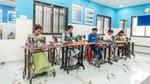
(1888–1949)
The story began with cartons of Sunlight soap.
In the summer of 1888, crates of Sunlight soap bars embossed with “Made in England by Lever Brothers” arrived at the Kolkata harbour, introducing India to the idea of branded products that would make everyday life a little easier.
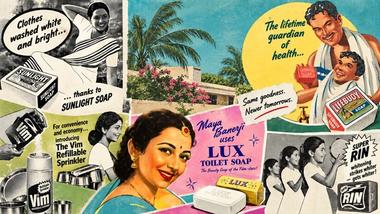
What followed was a growing portfolio of products that would become familiar names in Indian homes. Lifebuoy arrived in 1895. Pears followed in 1902, with Brooke Bond Red Label tea, LUX, Vim, Vinolia and Rinso joining the portfolio in the years that followed.
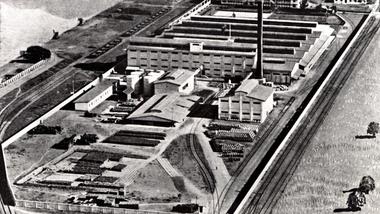
This was just the beginning. Manufacturing capabilities began taking shape in India, with the Hindustan Vanaspati Manufacturing Company established in 1931 and soap production beginning at Sewri in 1934.
In 1937, Dalda was officially introduced, beginning the journey of a brand that would become deeply embedded in Indian food culture.
The foundations of the company were being built, one product, factory and relationship at a time.
Sunlight arrives in India
Lifebuoy launched
Pears introduced
Brooke Bond Red Label introduced
Hindustan Vanaspati Manufacturing Company established
Lever Brothers India Limited was incorporated
Soap production begins at Sewri
United Traders Limited incorporated
Dalda introduced
Dedicated sales force established
Unilever begins training Indians for management roles
Pond’s Cold Cream launched in India

(1950s–1960s)
As the country changed, so did the company.
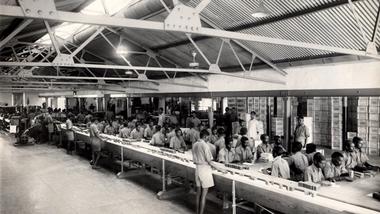
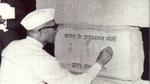
In 1951, Prakash Tandon became HUL’s first Indian Director. A decade later, he became its first Indian Chairman. By 1961, 191 of the company’s 205 managers were Indian.
This transition reflected a broader shift in the way HUL operated in India, with Indian leadership taking an increasingly central role in the business.
Research became another important part of that evolution. In 1957, HUL’s research activities received formal approval, followed by the establishment of a research unit in Mumbai and, in 1967, the Hindustan Unilever Research Centre.
The portfolio was evolving too. Surf was launched in 1959, followed by products across personal care, foods and home care in the decade that followed.
The company was becoming more Indian in its leadership, broader in its capabilities and increasingly focused on understanding the needs of the market it served.
Prakash Tandon appointed first Indian Director
Lever Brothers India Limited, Hindustan Vanaspati Manufacturing Company and United Traders Limited merged to form Hindustan Lever Limited, now Hindustan Unilever Limited
HUL became the first foreign subsidiary in India to offer 10% of its equity to the Indian public
HUL research activity formally approved
A research unit started operating at the Mumbai (Sewri) factory
Surf launched
Prakash Tandon becomes first Indian Chairman
Hindustan Unilever Research Centre opened
(1970s–1990s)
The next two decades brought a period of expansion and transformation.
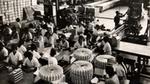
HUL modernised its soaps and detergents operations and expanded its manufacturing footprint. New brands entered the lives of Indian consumers.
Then came a bigger change.
India’s economic liberalisation in the 1990s opened new possibilities for businesses and consumers alike. HUL responded by expanding its portfolio and bringing together some of the country’s best-known businesses and brands.
The merger with Tata Oil Mills Company brought Kissan and other businesses into HUL. Brooke Bond Lipton India subsequently merged with HUL, while Pond’s and Lakmé became part of the company’s growing portfolio.
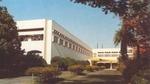
At the same time, investment in research continued, with an international research laboratory established in Bangalore in 1997.
HUL was growing with a more open, more competitive India.
Diversification into chemicals begins
Ten-year soaps and detergents modernisation plan launched
Lipton Tea (India) Limited incorporated
Fair & Lovely (now Glow & Lovely) introduced
Liberalisation boosts HUL growth
TOMCO merger
Wall’s introduced and Brooke Bond Lipton India formed
BBLIL merges with HUL
International Research Laboratory established in Bangalore
Pond’s India merges with HUL and Lakmé is fully acquired
(2000–2019)
The new millennium brought a different kind of opportunity.
India was becoming more connected, more diverse and more aspirational. HUL responded by looking beyond products to new ways of serving consumers and creating wider impact.
In 2000s, Project Shakti was launched alongside the Hindustan Lever Network, creating new avenues to reach consumers while enabling entrepreneurship driven livelihoods in rural communities.
New needs also created new categories. Ayush was launched in 2002 as HUL’s Ayurveda-based wellness brand, later evolving into a range of Ayurvedic personal care products.
A gravity water purifier was developed to address Indian needs; Pureit water purifier was test-marketed in 2004 and launched nationwide in 2008.
The company’s understanding of India continued to evolve. In 2014, the Winning in Many Indias strategy was launched nationally, recognising the diversity of consumers and markets across the country.
Meanwhile, sustainability and community initiatives became increasingly embedded in the business. In 2010, the Unilever Sustainable Living Plan was introduced, followed by initiatives such as Hindustan Unilever Foundation, Prabhat and Suvidha.
By the end of the decade, HUL was looking at growth through a broader lens: reaching more consumers, understanding them better and creating value beyond the products themselves.
Project Shakti launched
Ayush launched
Pureit test-marketed
Hindustan Lever Limited renamed Hindustan Unilever Limited
Pureit launched nationwide
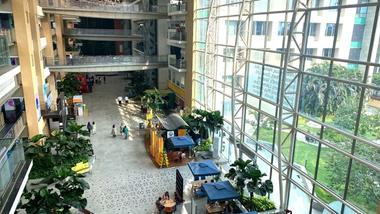
Unilever House, HUL’s Head Office opens in Mumbai
Unilever Sustainable Living Plan introduced
Hindustan Unilever Foundation set up to help contribute to India’s water security
Prabhat community initiative launched
Winning in Many Indias launched nationally
First Suvidha hygiene and sanitation centre inaugurated
Indulekha brand acquired
(2020–present)
The pace of change has accelerated.
Consumer expectations are evolving rapidly, technology is reshaping how businesses operate, and consumers are increasingly seeking personalisation, quality and value.
HUL has continued to evolve with this new environment.
The acquisition of GSK Consumer Healthcare in 2020 brought brands such as Horlicks and Boost into the portfolio. The company crossed ₹50,000 crore in turnover in 2022, opened its zero-carbon factory at Sumerpur and expanded its presence in the World Economic Forum’s Lighthouse Network.
More recently, the portfolio has continued to change. Pureit was sold in 2024, while the acquisition of Minimalist and brand launches such as Liquid I.V. and Simple have strengthened HUL’s presence in new and emerging spaces.
At the same time, manufacturing and technology are opening new possibilities. HUL’s factories are increasingly using digital technologies and advanced capabilities, with sites recognised by the World Economic Forum as Lighthouses.
The journey continues. As India changes, Hindustan Unilever will continue to evolve to serve the nation.
VWash and GSK Consumer Healthcare acquired
Turnover crosses ₹50,000 crore
HUL marks its 90th anniversary
Pureit business sold
Minimalist acquired
Ice cream business demerged to Kwality Wall's India Limited
Liquid I.V. brand launched
Haircare brand Nexxus launched
HUL has 6 World Economic Forum Lighthouse factories
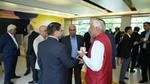
A company's history is a history of its people.
The managers who helped build India's early operations, the leaders who led the company's transition to Indian management, the scientists who established its research capabilities, and the teams who built factories, developed brands and found new ways to reach consumers.
From the first Indian Director, Prakash Lal Tandon, to the thousands of people who continue to shape HUL of today, progress has always depended on people willing to learn, build and adapt.
From Indianising leadership to building new capabilities, the people of HUL have shaped every chapter of the journey.

India is evolving rapidly, creating opportunities across an increasingly diverse consumer landscape. HUL's strategy is focused on four growth pillars: driving category consumption, delivering benefits through premiumisation, building market-making categories, and expanding into new demand spaces.
We bring this strategy to life through deep consumer intimacy, desirable brands built through our SASSY framework, future-ready go-to-market capabilities, and AI-powered innovation.
Supported by our people, culture and commitment to responsible growth, we are well positioned to create long-term value for all our stakeholders.
More than 90 years after the first crates of Sunlight arrived in Kolkata, the context has changed dramatically.
What remains unchanged is our values of Integrity, Respect, Responsibility and Pioneering and our passion and our perseverance.
To listen closely to consumers, to understand where India is going, and to keep learning, building and adapting.
Have you got a few minutes to complete a survey? We would love to hear about your experience using Hindustan Unilever Limited.